
TL;DR:
- All residents and nonresidents aged 16 and older must hold a valid fishing license and applicable stamps before fishing Wisconsin waters. County-specific regulations can modify season dates, bag limits, and gear restrictions, making local rule checks essential. Purchase licenses via the DNR’s Go Wild platform or authorized vendors, and always carry proof to avoid violations.
Wisconsin requires all residents and nonresidents age 16 and older to hold a valid fishing license and any applicable stamps before casting a line in state waters. This local fishing license requirements Wisconsin guide covers everything you need: who qualifies, which license types apply, what stamps you need for trout and salmon, and how local county rules can change the picture entirely. An annual resident license costs $20, while nonresidents pay $55. You can buy both through the Go Wild online platform or at registered vendors statewide. Get this right before your first cast, and your trip to the Northwoods stays focused on fishing.
Who needs a Wisconsin fishing license and what are the residency rules?
Every resident and nonresident aged 16 and older must carry a valid fishing license to fish Wisconsin’s inland waters. This is the baseline rule, and it applies whether you’re casting from a dock on Trout Lake or wading a stream in Vilas County. Children under 16 are generally exempt from the license requirement for standard hook-and-line fishing, which makes Wisconsin family-friendly for introducing kids to the sport.
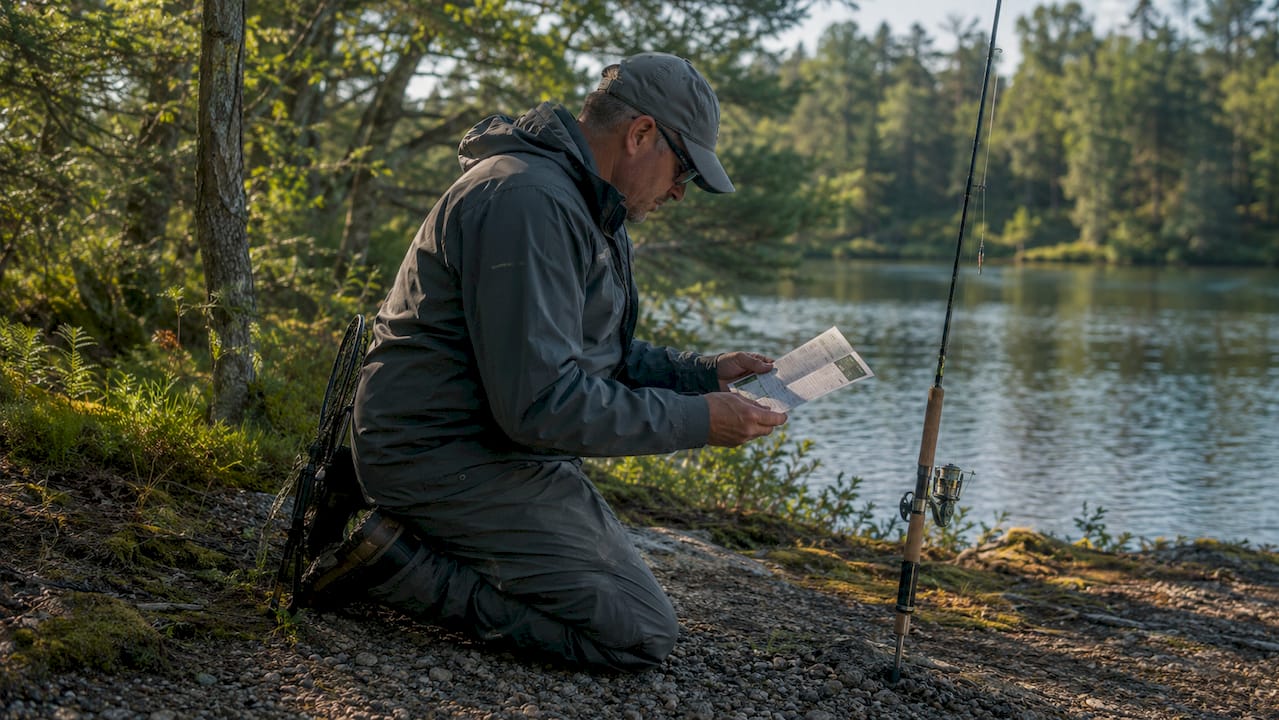
The exemption for younger anglers has limits, though. Nonresidents under 16 do not need a license for hook-and-line fishing, but they do need one for other methods like spearing, bow fishing, or hand harvesting. This distinction surprises many families who assume the age exemption covers all fishing activity. It does not.
Residency status directly affects both cost and license type. Wisconsin defines a resident as someone who has lived in the state for at least 30 consecutive days before purchasing a license. Nonresidents pay significantly more. A spousal license, which covers both spouses under one purchase, runs $31 for residents and is a smart option for couples who fish together regularly.
Here is a quick breakdown of who needs what:
- Residents age 16 and older: Annual resident fishing license required
- Nonresidents age 16 and older: Annual nonresident license or short-term option required
- Children under 16 (residents and nonresidents): Exempt for hook-and-line fishing only
- Nonresident children under 16: License required for spearing, netting, or bow fishing
- Couples fishing together: Spousal license available at $31 for residents
Pro Tip: If you’re bringing the whole family to the Northwoods, check each person’s age and planned fishing method before purchasing. A child who wants to try bow fishing needs a license even if they’re 12 years old.
What types of fishing licenses and stamps are required in Wisconsin?
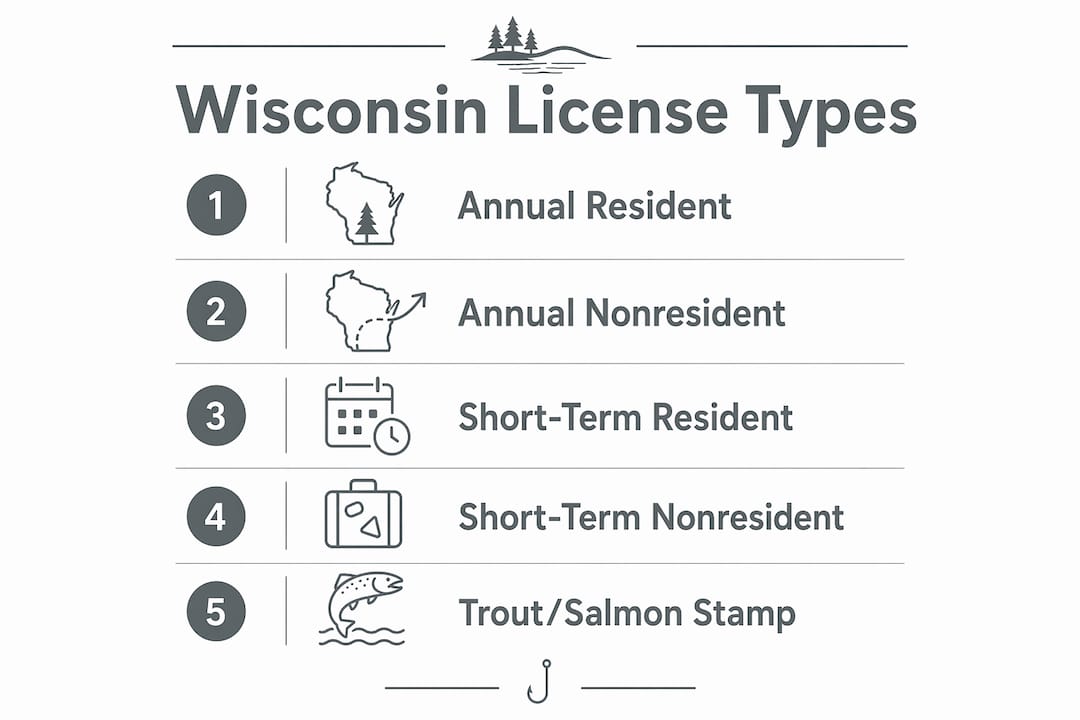
Wisconsin offers several license types to match different trip lengths and angler profiles. Understanding the full menu prevents you from overpaying or, worse, fishing with the wrong credential.
Here is a comparison of the main license options and their costs:
| License Type | Who It’s For | Cost |
|---|---|---|
| Annual resident | Wisconsin residents 16+ | $20 |
| Annual nonresident | Out-of-state anglers 16+ | $55 |
| Spousal (resident) | Both spouses on one license | $31 |
| 1-day resident | Residents fishing one day | $8 |
| 15-day nonresident | Visitors for extended trips | $33 |
| Inland trout stamp | Anyone targeting inland trout | $10 |
| Great Lakes trout/salmon stamp | Anyone fishing Lake Michigan or Lake Superior | $10 |
Short-term licenses are ideal for visitors who won’t be in Wisconsin long enough to justify an annual license. A 1-day resident license costs $8, and a 15-day nonresident option runs $33. These are available through the same channels as annual licenses.
Stamp privileges are where many anglers get tripped up. A fishing license alone does not cover trout or salmon fishing in all waters. Trout and salmon fishing requires an inland trout stamp for inland waters and a separate Great Lakes trout/salmon stamp for Lake Michigan and Lake Superior waters. Both stamps cost $10 each. The key point: the required stamp depends on the waterbody you’re fishing, not just the species you’re targeting. An angler fishing a Lake Michigan tributary needs the Great Lakes stamp even if they’re hoping to catch brown trout.
Pro Tip: Buy your stamps at the same time as your license through Go Wild. Forgetting a stamp is one of the most common compliance mistakes in Wisconsin, and the fine is not worth the savings.
How do local county regulations affect license requirements?
A statewide fishing license covers you for most waters, but Wisconsin’s fishing regulations do not stop at the state level. Special county and waterbody regulations can override general statewide rules, altering season openers, bag limits, gear restrictions, and even trolling permissions on specific lakes and rivers.
Wisconsin’s general inland fishing season opens May 3, but some waters allow hook-and-line fishing earlier or year-round under special rules. This means the lake you’re planning to fish might open weeks before or after the general season. Checking the county-specific regulations before your trip is not optional. It is the difference between a legal outing and a citation.
Here are the key local regulation factors to check before fishing any Wisconsin water:
- Season opener dates: Some lakes and rivers have earlier or later openers than the statewide date
- Bag and size limits: Local rules may be more restrictive than statewide limits for walleye, bass, or panfish
- Gear restrictions: Certain waters prohibit specific lures, live bait, or trolling
- Designated trout streams: These have their own opener dates and special rules separate from general inland seasons
- Tribal waters and ceded territory: Additional regulations may apply in areas covered by tribal treaty rights
The Wisconsin DNR publishes county-specific regulation summaries, and eRegulations maintains a county-by-county special regulations resource that is worth bookmarking. Vilas County, Oneida County, and Iron County each have waters with unique rules that differ from the general statewide framework. Anglers fishing the Northwoods should pay particular attention to these local overlays.
Where and how can you buy and carry your Wisconsin fishing license?
Purchasing a Wisconsin fishing license is straightforward once you know your options. The Wisconsin DNR’s Go Wild platform is the fastest route. You can buy online at any hour, print your license immediately, or store it digitally on your phone. Go Wild also handles stamp purchases in the same transaction, so you can complete your full compliance checklist in one sitting.
If you prefer buying in person, follow these steps:
- Find a registered vendor. Sporting goods stores, bait shops, and many gas stations across Wisconsin are authorized to sell licenses. Look for the DNR-authorized vendor sign.
- Visit a DNR service center. These centers handle all license types, including specialty permits and replacement licenses.
- Bring your ID. Residency verification may be required, especially for first-time buyers or those claiming resident pricing.
- Purchase your stamps at the same time. Do not leave the counter without the inland trout stamp or Great Lakes stamp if your trip involves trout or salmon.
- Carry proof at all times while fishing. A digital copy on your phone is acceptable, but a printed copy is a reliable backup.
Anglers must carry proof of their license and present it on demand to any Wisconsin DNR warden. Fishing without it on your person is a violation even if you purchased the license. Private water does not exempt you from this rule. Most private ponds are considered waters of the state and require a valid license. The only exception is a fully isolated artificial pond on private land where the owner grants permission to fish and the water has no connection to public waterways.
Pro Tip: The Wisconsin DNR recommends buying your license early in the April 1 license cycle. Early purchase gives you access to pre-season fishing opportunities and puts the updated regulation booklet in your hands before the crowds hit the water.
What exceptions, free fishing days, and common pitfalls should you know?
Wisconsin offers a few legitimate ways to fish without a license, but the conditions are specific. The Wisconsin DNR’s Free Fun Weekend waives license and stamp requirements for all anglers for a designated two-day period each year. The 2026 Free Fun Weekend was June 6 and 7. During this event, anyone can fish without purchasing a license. All other regulations, including bag limits, size limits, and gear rules, remain fully enforced.
Common pitfalls that catch anglers off guard include:
- Fishing without the correct stamp. A base fishing license does not cover inland trout or Great Lakes salmon fishing. Many anglers discover this at the boat ramp.
- Assuming private ponds are exempt. Most private ponds are still state waters for licensing purposes. Only a fully isolated artificial pond with owner permission may qualify for an exemption.
- Ignoring local county rules. Fishing a lake under general season rules when that specific water has a later opener is a violation, even with a valid license.
- Letting your license expire mid-trip. Wisconsin fishing licenses run April 1 through March 31. If your trip spans the April 1 renewal date, you need to buy a new license.
- Using the wrong license type for your method. Spearing, netting, and bow fishing require specific licenses beyond the standard hook-and-line credential.
Staying compliant is mostly a matter of doing your homework before you leave home. Check the Wisconsin DNR website, review the county-specific rules for your destination, and confirm your stamps match your target species and water type.
Key takeaways
Wisconsin fishing compliance requires a valid license, the correct stamps, and knowledge of local county rules before you fish any water in the state.
| Point | Details |
|---|---|
| License age threshold | Residents and nonresidents age 16 and older must hold a valid fishing license. |
| Stamp requirements | Inland trout and Great Lakes trout/salmon stamps are required beyond the base license for those species. |
| Local county rules | County-specific regulations can override statewide rules on season dates, bag limits, and gear. |
| Purchase options | Buy through Go Wild online, registered vendors, or DNR service centers statewide. |
| Private water misconception | Most private ponds are state waters and require a license unless the pond is fully isolated and artificial. |
Why I always tell anglers to read the fine print before fishing Wisconsin
I’ve watched more than a few experienced anglers get tripped up by Wisconsin’s licensing system, and it’s almost never the base license that causes the problem. It’s the stamps. Someone drives four hours to fish a Lake Michigan tributary for steelhead, and they’ve got their annual license but skipped the Great Lakes trout/salmon stamp. That’s a $10 oversight that turns into a real headache.
My honest advice: treat the stamp purchase as non-negotiable the moment you decide you’re targeting trout or salmon. Buy it with your license, not as an afterthought. The Go Wild platform makes this easy because it walks you through the options in sequence.
The county regulation piece is the other thing I’d push hard on. Wisconsin has over 3,200 lakes, and a meaningful number of them carry special rules that differ from the statewide framework. Vilas County alone has dozens of waters with modified bag limits or gear restrictions. Spending five minutes on the eRegulations county lookup before your trip is the single best compliance habit you can build.
For anyone new to fishing Wisconsin’s Northwoods, I’d also suggest checking the Northwoods fishing reports from Northwoodswisconsin before your trip. Current conditions and local knowledge make a real difference in where you fish and what you target, and that context shapes which stamps and local rules actually apply to your outing. Happy fishing!
— Chris
Plan your Wisconsin fishing trip with the right base camp
Getting your license sorted is step one. Step two is finding the right place to stay so you’re on the water at first light instead of commuting from a distant hotel. Northwoodswisconsin connects anglers with lodging options built around fishing access in the heart of the Northwoods. Idle Hours Resort in St. Germain puts you minutes from some of Vilas County’s best walleye and muskie water, while The Lodge at Crooked Lake offers direct access to productive fishing with comfortable accommodations. Both properties are popular with anglers who want to maximize time on the water. Browse the full northern Wisconsin lodging guide to find the right fit for your trip.
FAQ
Do children under 16 need a fishing license in Wisconsin?
Children under 16 are exempt from the fishing license requirement for hook-and-line fishing in Wisconsin. However, nonresident children under 16 do need a license if they plan to use methods like spearing, bow fishing, or netting.
What is the cost of a Wisconsin resident fishing license?
An annual Wisconsin resident fishing license costs $20. Short-term options are also available, including a 1-day resident license for $8.
Do I need a stamp to fish for trout in Wisconsin?
Yes. Fishing for trout in Wisconsin requires an additional stamp beyond the base license. An inland trout stamp ($10) covers inland waters, and a Great Lakes trout/salmon stamp ($10) is required for Lake Michigan and Lake Superior fishing.
Can I fish in Wisconsin without a license on Free Fun Weekend?
Yes. Wisconsin DNR’s Free Fun Weekend waives license and stamp requirements for all anglers. All other regulations, including bag limits and size limits, remain in effect during the event.
Does a Wisconsin fishing license cover private ponds?
Most private ponds are considered waters of the state and require a valid fishing license. The only exception is a fully isolated artificial pond on private land where the owner grants permission and the water has no connection to public waterways.
Recommended
