
TL;DR:
- Wisconsin lakes host over 160 native fish species, with targeted anglers focusing on walleye, bass, pike, musky, and panfish. Climate change, invasive species, and regulations significantly impact fish populations and distribution patterns in these lakes. Staying informed and adhering to proper fishing practices are essential for sustainable enjoyment of Wisconsin’s fisheries.
Wisconsin lakes hold more than 160 native fish species, with walleye, largemouth bass, northern pike, musky, and panfish defining the types of freshwater fish in Wisconsin lakes that anglers target most. These species thrive across the state’s 3,200-plus lakes, shaped by water temperature, depth, and habitat structure. Whether you’re planning your first trip to the Northwoods or you’ve been fishing Wisconsin your whole life, knowing what swims beneath the surface makes every outing more productive. This guide covers the key species, their habitats, the regulations that protect them, and the environmental forces shifting their populations right now.
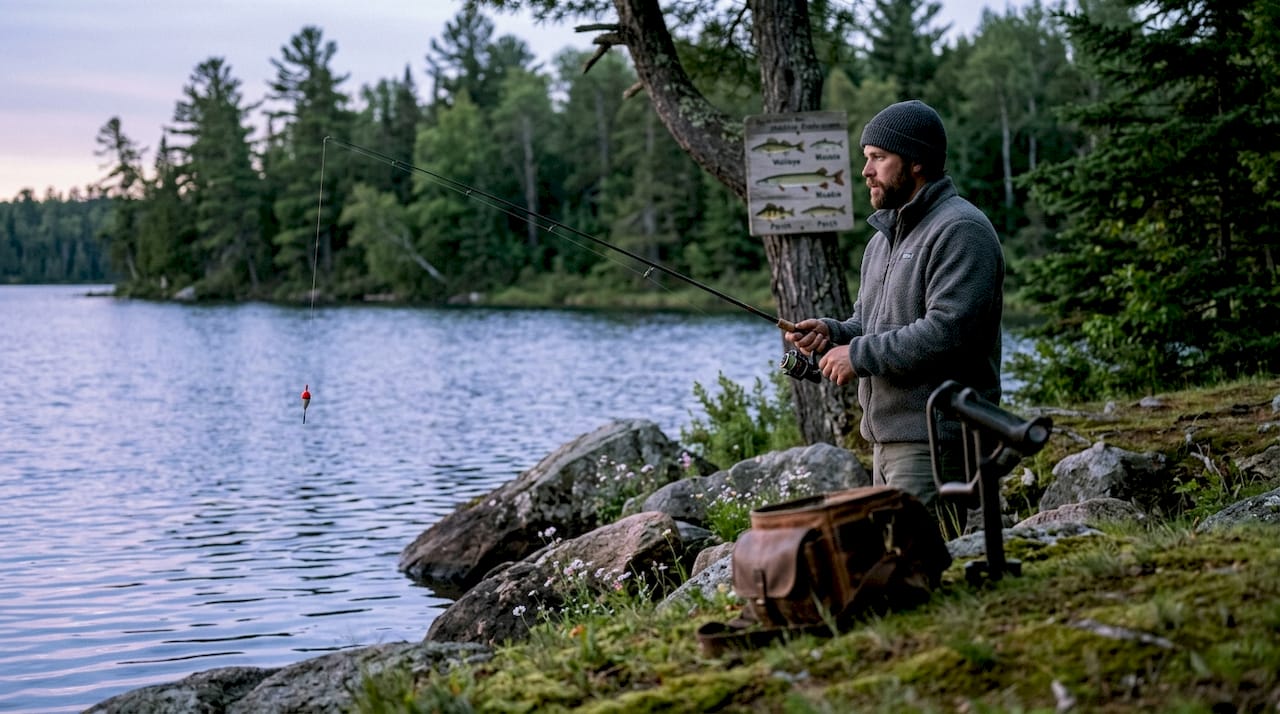
1. Top game fish species in Wisconsin lakes
Wisconsin’s most sought-after game fish fall into two broad thermal categories: coolwater species like walleye and warmwater species like largemouth bass. Understanding which category your target fish belongs to tells you a lot about where and when to find it.
- Walleye (Sander vitreus) is Wisconsin’s most popular table fish. It prefers clear, cooler lakes with rocky or sandy bottoms and is most active at dawn and dusk. The Eagle River Chain of Lakes is one of the top walleye destinations in the state.
- Largemouth bass (Micropterus salmoides) thrives in warmer, weedy shallows. It strikes aggressively on topwater lures, crankbaits, and soft plastics near lily pads and submerged timber.
- Smallmouth bass (Micropterus dolomieu) favors clearer, cooler water with rocky structure. It fights harder pound for pound than largemouth and is a favorite on rivers and clear inland lakes.
- Northern pike (Esox lucius) is an apex predator found in weedy bays and shallow flats. It strikes large spinnerbaits, suckers, and jerkbaits, especially in spring and fall.
- Muskellunge (Esox masquinongy), or musky, is Wisconsin’s state fish and the ultimate trophy target. The Turtle-Flambeau Scenic Waters Area is a trophy-class musky fishery supporting largemouth bass, northern pike, and walleye as well.
- Lake sturgeon (Acipenser fulvescens) is a prehistoric species under active conservation management. Catch-and-release is standard practice, and many Wisconsin rivers and lakes have strict size and season limits to protect recovering populations.
Pro Tip: For walleye, a slip bobber rig with a live leech fished over a rocky point at sunset is one of the most consistent setups on Northern Wisconsin lakes from late May through July.
2. Panfish species popular in Wisconsin lakes
Panfish are the backbone of Wisconsin’s recreational fishing scene. They’re abundant, accessible, and perfect for families, beginners, and ice fishing enthusiasts. Wisconsin lakes contain bluegill, crappie, and pumpkinseed among the most common panfish species found across hundreds of inland lakes.
- Bluegill (Lepomis macrochirus) is the most widely distributed panfish in the state. It holds near weed edges and dock pilings and bites readily on small jigs, worms, and crickets. Bluegill are a top target for ice fishing because they school tightly under the ice.
- Black crappie (Pomoxis nigromaculatus) suspends in open water near brush piles and submerged timber. It feeds heavily on small minnows and is most active in low-light conditions. Crappie are prized for their mild, flaky fillets.
- Pumpkinseed (Lepomis gibbosus) looks similar to bluegill but has bright orange and blue markings on its gill cover. It prefers shallow, weedy water and is common in smaller lakes and ponds throughout the Northwoods.
- Yellow perch (Perca flavescens) is a schooling fish that lives near the bottom in mid-depth water. It’s a favorite for ice fishing and produces excellent table fare. Perch populations vary significantly by lake, so checking local fishing reports before targeting them is worth your time.
Panfish season in Wisconsin runs year-round on most lakes, making them a reliable option when walleye or bass fishing slows down. Their willingness to bite in cold water also makes them the dominant target during the ice fishing season from December through March.
3. How invasive fish species affect Wisconsin lakes
Invasive fish species are one of the most serious threats to Wisconsin’s freshwater fisheries. The round goby (Neogobius melanostomus) is the most problematic invasive fish currently spreading through Wisconsin waters. It competes directly with native species for food and habitat and disrupts the food web by consuming fish eggs.
Wisconsin’s 2026 regulations reflect an angler-based control approach for round goby management. Harvest limits have been removed entirely, meaning anglers can keep and kill an unlimited number of round gobies. This policy treats recreational anglers as an active tool in population control, which is a practical and cost-effective strategy.
Pro Tip: If you catch a round goby, do not return it to the water alive. Kill it immediately, and do not transport it to another waterbody. Disposing of it in a trash can on-site is the correct procedure.
Key prevention measures every angler should follow:
- Clean your boat and gear before leaving any lake. Remove all aquatic plants and mud.
- Drain your live well and bilge completely before moving to a different waterbody.
- Never transfer baitfish between lakes. Use only bait purchased from licensed dealers or caught in the lake you’re fishing.
- Inspect waders and wading boots for attached organisms, especially if you fish multiple water systems in a single trip.
Gear cleaning and live well draining are critical in multi-lake systems to prevent the spread of invasives and preserve fishery integrity across the Northwoods.
4. How climate and lake conditions shape fish distribution
Modeling across 2,151 Wisconsin lakes shows that climate warming is altering recruitment and abundance for both walleye and largemouth bass, with coolwater species like walleye projected to decline in warmer, shallower lakes while warmwater species expand their range. This shift has direct implications for where you’ll find your target species in the coming decades.
Thermal habitat differences are the core reason freshwater fish species vary so dramatically among Wisconsin lakes. A deep, clear lake in Vilas County holds very different fish than a shallow, weedy lake in the same county. Lake morphometry, meaning the shape and depth profile of a lake, determines how water stratifies in summer and how long ice cover persists in winter.
| Lake type | Dominant species | Fishing season peak |
|---|---|---|
| Deep, clear, cold | Walleye, smallmouth bass, lake trout | Late spring, early fall |
| Shallow, weedy, warm | Largemouth bass, northern pike, panfish | Summer, ice season |
| Mid-depth, mixed | Walleye, crappie, yellow perch | Spring, late fall |
| Large, open water | Musky, walleye, cisco | Summer, early fall |
For anglers, this means matching your lake selection to your target species is as important as choosing the right lure. Checking the best fishing lakes in Northern Wisconsin by species type before you book a trip saves time and puts you on fish faster.
5. Key fishing regulations for Wisconsin lake species
Wisconsin fishing regulations are species-specific, lake-specific, and date-specific. The 2026 fishing guidance makes clear that anglers must match the exact species, waterbody, and date before keeping any fish. This three-part check is not optional. Violations carry real penalties, and the rules exist because they work.
The most significant regulatory development in 2026 involves walleye. The Wisconsin DNR proposes a one-fish-per-day bag limit with a protected 22 to 28 inch slot limit on lakes showing low juvenile walleye counts. Fish within that slot must be released immediately. This protects the spawning-size classes most critical to population recovery.
Research confirms that fishing pressure affects walleye more than climate warming does. Reducing harvest on struggling lakes is the most direct lever managers have to stabilize populations. That’s why these slot limits matter and why following them is not just a legal obligation but a conservation act.
Key regulation points every Wisconsin angler should know:
- Walleye on lakes of concern: one-fish daily bag limit, 22 to 28 inch slot limit protected.
- Musky statewide minimum length: 36 inches on most waters, with some lakes requiring 40 or more inches.
- Northern pike: bag limits and size minimums vary by county and waterbody. Always check before keeping fish.
- Panfish: bluegill and crappie have daily bag limits that differ by lake. Many Northwoods lakes cap bluegill at 25 per day.
- Lake sturgeon: catch-and-release only on most waters. Harvest seasons are extremely limited and require a separate tag.
The rules lookup workflow recommended by Wisconsin fishing guides involves three steps: identify the species, identify the waterbody, and confirm the current date falls within the open season. Running this check before you leave the dock prevents unintentional violations.
| Species | Standard bag limit | Special conditions |
|---|---|---|
| Walleye | 5 per day (most lakes) | 1 per day with slot limit on lakes of concern |
| Largemouth bass | 5 per day | Size minimums vary by lake |
| Northern pike | 5 per day | Varies by county |
| Bluegill | 25 per day | Reduced limits on some Northwoods lakes |
| Musky | 1 per day | 36 inch minimum statewide, longer on some lakes |
Key takeaways
Wisconsin’s freshwater fisheries are best understood through the lens of species, habitat, and regulation working together to define where fish live and how you can legally pursue them.
| Point | Details |
|---|---|
| Species match habitat | Walleye favor deep, cool lakes while largemouth bass dominate warm, weedy shallows. |
| Walleye regulations tightened | Lakes of concern carry a one-fish bag limit and a 22 to 28 inch protected slot in 2026. |
| Invasives require action | Round goby harvest is now unlimited. Kill and dispose of them on-site, never transfer live. |
| Climate is shifting species ranges | Warming lakes favor warmwater species, reducing walleye habitat across hundreds of Wisconsin lakes. |
| Regulations are three-part checks | Always verify species, waterbody, and date before keeping any fish in Wisconsin. |
What I’ve learned from years of fishing Wisconsin’s lakes
I’ve spent a lot of time on Northern Wisconsin lakes, and the one thing that consistently separates productive anglers from frustrated ones is preparation. Most people know the popular species. Fewer people understand how much the regulations change from lake to lake, and fewer still appreciate how fast the fish populations themselves are changing.
The walleye situation is the clearest example. I’ve watched lakes that produced reliable limits twenty years ago become genuinely difficult fisheries. The science backs up what anglers are seeing on the water. Fishing pressure, not just warming temperatures, is the primary driver of those declines. That means every angler who follows the slot limits on a struggling lake is directly contributing to its recovery. That’s not abstract conservation talk. That’s cause and effect you can observe over a few seasons.
The invasive species issue is equally real and more preventable. I’ve seen anglers skip the gear cleaning step because it feels inconvenient. But round goby spread is documented and measurable, and the lakes that get them don’t go back to what they were. Cleaning your boat takes five minutes. Losing a fishery takes decades to reverse.
My honest advice: use the Wisconsin DNR fishing reports before every trip, not just at the start of the season. Conditions change, regulations get updated, and the lakes that are producing shift throughout the year. The anglers who stay informed catch more fish and do less damage. That combination is what keeps Wisconsin fishing worth coming back to.
— Chris
Plan your Wisconsin fishing trip with Northwoodswisconsin
Northern Wisconsin puts you within reach of thousands of lakes holding walleye, musky, bass, and panfish, all within a short drive of world-class lodging.
Northwoodswisconsin lists resorts and cabin rentals positioned directly on or near the top fishing lakes in the region. Idle Hours Resort in St. Germain is a favorite among serious anglers for its lake access and proximity to premier musky and walleye water. If you prefer a private cabin setup, Anchor Rentals offers cabin options near top fishing lakes with the flexibility to fish on your own schedule. Browse the full Northern Wisconsin lodging listings to find the right base for your next fishing trip. Happy fishing!
FAQ
What fish are most common in Wisconsin lakes?
Walleye, largemouth bass, northern pike, bluegill, and black crappie are the most commonly caught fish across Wisconsin’s inland lakes. Musky and yellow perch are also widely distributed, particularly in Northern Wisconsin.
What is the walleye bag limit in Wisconsin in 2026?
The standard walleye bag limit is five fish per day on most Wisconsin lakes, but lakes designated as “lakes of concern” carry a one-fish daily limit with a protected 22 to 28 inch slot limit under the DNR’s 2026 adaptive management framework.
How do I identify freshwater fish species in Wisconsin?
Wisconsin lake fish identification relies on body shape, coloring, and fin placement. The Wisconsin DNR publishes a free fish identification guide covering all major species, and Northwoodswisconsin provides local fishing reports with species-specific tips for the Northwoods region.
What is the best time of year to fish Wisconsin lakes?
Late spring through early summer is the most productive period for walleye and bass, while panfish and perch bite reliably year-round including through the ice. Musky fishing peaks in fall when water temperatures drop into the low 50s Fahrenheit.
Are invasive fish species a problem in Wisconsin lakes?
Yes. Round goby is the most widespread invasive fish in Wisconsin and is actively spreading through connected lake systems. Anglers can now harvest unlimited round gobies under 2026 regulations, and cleaning gear between lakes is required to prevent further spread.
Recommended
