
TL;DR:
- Local hunting clubs in Wisconsin are member groups that lease land, enforce rules, and promote land stewardship. They operate with written bylaws, structured governance, and regular communication to maintain land access and safety. Joining involves adherence to rules, fee payment, and active participation to support conservation and wildlife management efforts.
Local hunting clubs in Wisconsin are organized member groups where hunters pay annual dues, follow written bylaws, and share responsibility for land stewardship to access quality private hunting grounds together. Understanding how local hunting clubs work in Wisconsin helps you decide whether joining one fits your goals, budget, and commitment level. These clubs function somewhere between a private lease arrangement and a conservation organization. They give members access to managed land while holding everyone accountable to shared rules that protect wildlife and maintain landowner trust.
How do local hunting clubs work in Wisconsin?
A Wisconsin hunting club is a structured, rule-driven group. Members pool resources to lease private farmland or timberland, then manage that land cooperatively under a set of bylaws that govern everything from harvest reporting to guest policies. The term “hunting club” covers a wide range of groups, from informal deer camps with handshake agreements to formally incorporated organizations with elected officers and written contracts. The more land and members involved, the more formal the structure tends to be.
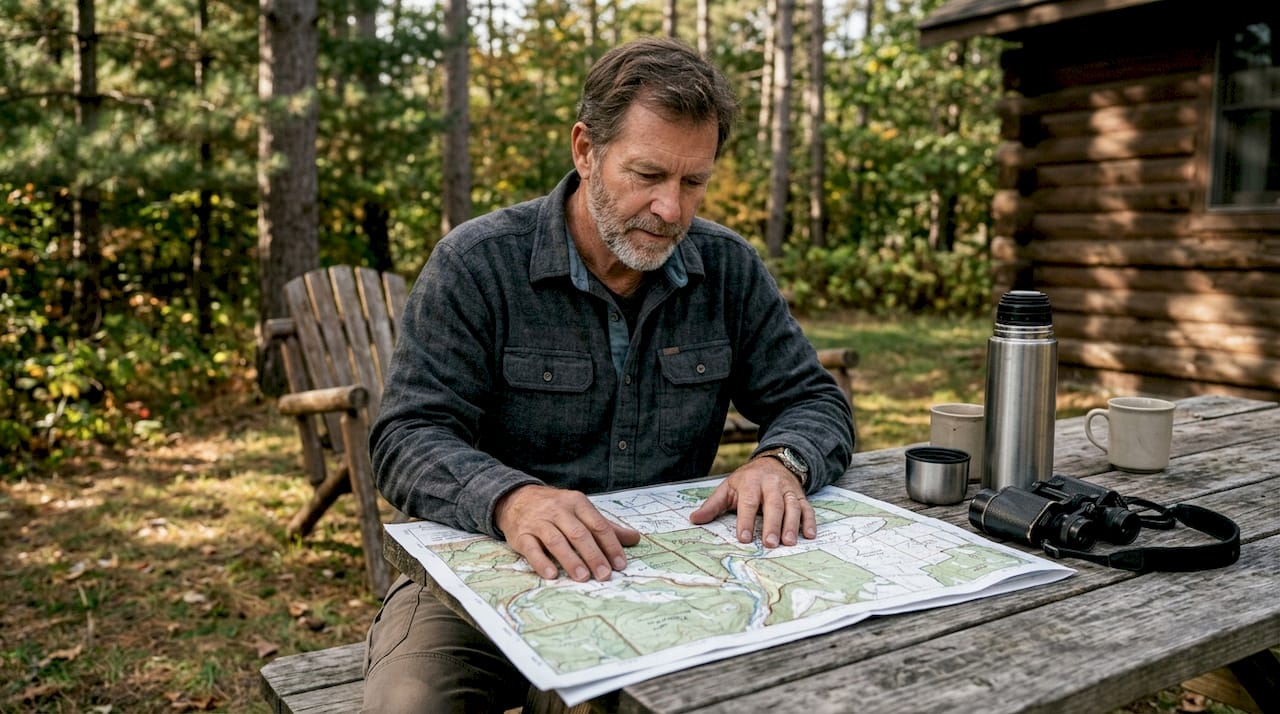
Formal bylaws function as an operating manual that prevents disputes and keeps every member aligned on conduct, safety, and reporting. Without them, disagreements over stand placement, guest privileges, or harvest limits can fracture a club quickly. Wisconsin clubs that last decades almost always have clear written rules from the start.
What does membership and governance look like?
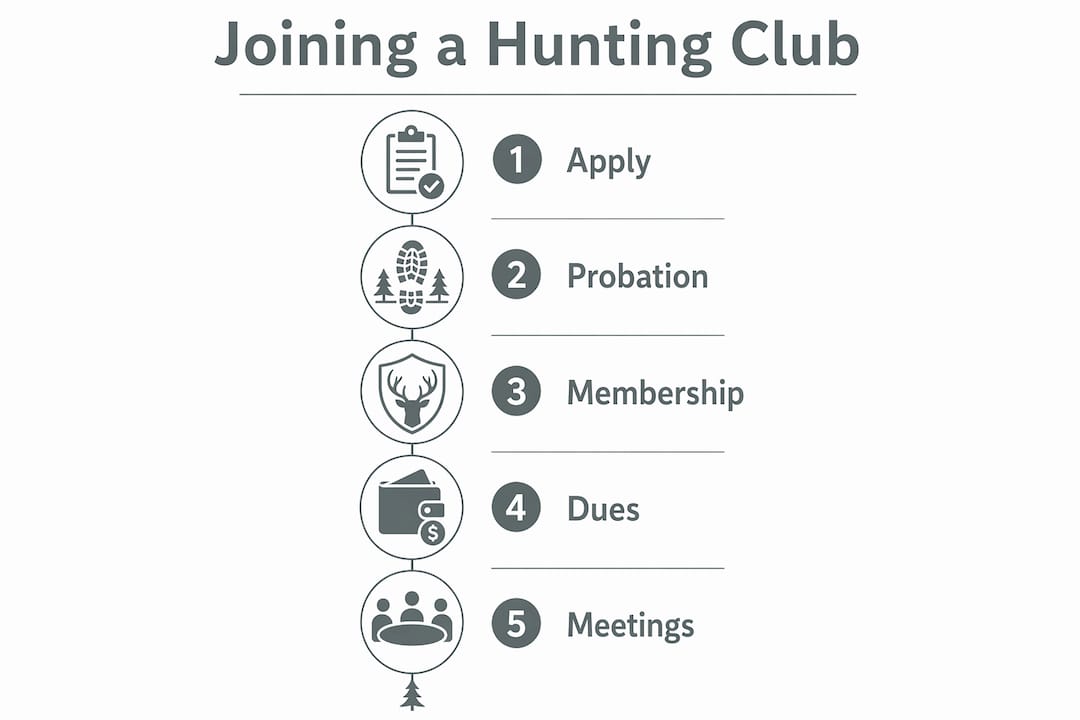
Joining a Wisconsin hunting club is not as simple as paying a fee and showing up. Membership requires a valid hunting license, a signed agreement to the club’s ethical charter, and often a full probationary season before full membership is granted. During that probationary period, new members are observed for rule compliance, work ethic, and how well they fit the club’s culture.
Governance typically follows a simple structure:
- President or club leader: Runs meetings, communicates with landowners, and enforces bylaws.
- Secretary or treasurer: Tracks dues payments, meeting minutes, and financial records.
- General members: Vote on rule changes, attend mandatory meetings, and complete required work hours.
- Probationary members: Participate but cannot vote until full membership is granted.
Annual dues typically range from $500 to $2,000 per member, covering lease costs, liability insurance, and habitat improvement expenses. That range reflects real differences in land quality, acreage, and the number of members splitting costs. A club leasing 500 acres of prime Wisconsin deer habitat will charge more than one sharing a smaller woodlot.
Most clubs hold meetings two to four times per year. Fall meetings set harvest goals and review stand assignments. Spring meetings address lease renewals, work day schedules, and budget planning. Bylaws typically spell out quorum requirements, voting procedures, and what happens when a member misses mandatory meetings.
Pro Tip: Before joining any club, ask to read the full bylaws before signing anything. A club that hesitates to share its written rules is a club worth avoiding.
How do clubs secure land access and manage landowner relationships?
Land access is the foundation of every Wisconsin hunting club. Most clubs lease private farmland or timberland through formal written agreements that outline permitted activities, liability coverage, and the club’s obligations to the property. Effective cooperation with landowners requires formal lease agreements that include insurance documentation and regular reports of club activities on the land.
Securing and keeping a good lease follows a clear process:
- Identify target properties. Focus on parcels with diverse habitat, including field edges, wetlands, and timber stands that support deer, turkey, and other Wisconsin game species.
- Approach landowners professionally. Present the club as an organized, responsible group. Bring references, a summary of your bylaws, and proof of liability insurance.
- Draft a written lease agreement. Cover permitted species, season dates, vehicle access, stand placement rules, and habitat improvement commitments.
- Provide regular activity reports. Send the landowner a written summary of harvest data, volunteer work completed, and any property improvements after each season.
- Complete habitat improvements as promised. Food plots, invasive species removal, and fence repairs build goodwill and demonstrate that the club treats the land as a long-term investment.
Failing to keep landowners informed is a primary cause for lost leases. A landowner who feels ignored or taken for granted will not renew. Clubs that send a simple written report after deer season and show up for a spring work day retain their leases far longer than those that go silent after the last hunt.
Pro Tip: Send a handwritten thank-you note to your landowner at the end of each season. It takes five minutes and sets your club apart from every other group that has ever asked to hunt that property.
What rules and practices keep clubs running safely and ethically?
Wisconsin hunting clubs operate like small businesses with contracts. Clubs outline strict conduct, reporting, and maintenance obligations with penalties for non-compliance. That structure is what separates a well-run club from a group of friends who argue every fall.
Common operational rules
| Rule category | Typical requirement |
|---|---|
| Harvest reporting | Report all harvested game within 24 hours to the club record keeper |
| Stand placement | Stands must be registered and approved; minimum distance between stands required |
| Check-in/check-out | Members sign in before hunting and out after leaving the property |
| Work hours | Members complete a set number of annual work hours for habitat and trail maintenance |
| Guest policy | Guests require advance approval and a member must accompany them at all times |
Harvest reporting within 24 hours and minimum annual work hours for habitat maintenance are among the most common club mandates in Wisconsin. These two rules do the most to keep a club functional. Harvest data feeds into wildlife management decisions, and work hours keep the property in shape without putting the burden on one or two people.
Consequences for rule violations typically escalate in steps:
- First offense: written warning from club leadership
- Second offense: suspension from hunting for a defined period
- Third offense: removal from the club with no dues refund
Safety rules are non-negotiable. Stand placement maps prevent two members from setting up in overlapping zones. Check-in and check-out logs create accountability and help locate a member quickly if something goes wrong in the field.
What are the real benefits of joining a Wisconsin hunting club?
The most obvious benefit is access to private, managed land. Public land in Wisconsin offers good hunting, but private club land is managed specifically for game production, which means better habitat and less pressure from non-members. Members gain access to expert support, managed territories, training, and social activities that individual hunters simply cannot replicate on their own.
Beyond land access, club membership delivers:
- Conservation participation. Clubs engage in habitat projects impossible for individual hunters, from large-scale food plot programs to coordinated predator management.
- Cooperative wildlife management. Successful clubs form cooperatives with neighboring landowners to coordinate deer management across multiple properties, which produces healthier herds and more consistent hunting.
- Education and mentorship. Experienced members pass on knowledge about scouting, stand placement, and field dressing that shortens the learning curve for newer hunters.
- Shared resources. Equipment like ATVs, food plot implements, and game cameras gets shared across members, reducing individual costs.
- Social connection. Annual banquets, work days, and post-season gatherings build friendships that extend well beyond hunting season.
Wildlife biologist Donnie Wood notes that successful cooperatives stem from regular neighbor engagement, building trust and shared management goals over time. That principle applies directly to Wisconsin clubs. The clubs that produce the best hunting are almost always the ones that think beyond their own lease boundaries.
You can find northern Wisconsin recreation resources that complement club hunting, including trails, fishing, and area information useful for planning a full outdoor season.
Key Takeaways
Wisconsin hunting clubs succeed when members commit to shared rules, consistent landowner communication, and cooperative land management from day one.
| Point | Details |
|---|---|
| Dues fund the operation | Annual dues of $500–$2,000 cover lease, insurance, and habitat costs for each member. |
| Bylaws prevent conflict | Written rules covering conduct, reporting, and penalties keep clubs functional long-term. |
| Landowner communication is critical | Regular written reports and volunteer work are the top factors in retaining a lease. |
| Harvest reporting drives management | Reporting game within 24 hours gives clubs the data needed to make sound wildlife decisions. |
| Cooperatives multiply results | Clubs that coordinate with neighboring landowners produce better herd management than those working alone. |
What I’ve learned from years around Wisconsin hunting clubs
I’ve watched clubs thrive and I’ve watched them fall apart, and the difference almost never comes down to the quality of the land. It comes down to communication. The clubs that last are the ones where members treat the whole operation with the same seriousness they bring to opening day. That means showing up for work days even when the weather is bad, filing harvest reports on time, and being honest with leadership when something goes wrong on the property.
The hardest adjustment for new members is accepting that a hunting club is not a solo experience with shared costs. You give up some individual freedom in exchange for access and community. You cannot hunt wherever you want, whenever you want. Stand assignments, check-in requirements, and guest restrictions exist for good reasons, and the members who chafe against those rules are usually the ones who end up leaving or getting removed.
My honest advice to anyone considering joining a Wisconsin club: spend a full season as a probationary member before deciding if the culture fits. Pay attention to how leadership handles disagreements. A club that resolves conflict calmly and transparently will serve you well for decades. One that lets grievances fester will make every fall miserable.
The long-term members I respect most are the ones who see their club as a conservation commitment, not just a hunting perk. They invest in the land, support the landowner, and mentor newer hunters. That mindset is what makes Wisconsin’s local hunting club culture genuinely worth being part of.
— Chris
Planning your Wisconsin hunting trip around club country
Wisconsin’s Northwoods region sits at the center of some of the state’s best deer, turkey, and waterfowl habitat. Whether you are scouting for a club to join or planning a hunt on public land nearby, having the right base camp makes every day in the field better.
Northwoodswisconsin connects hunters with lodging options close to prime northern Wisconsin hunting areas. From full-service resorts to private cabin rentals, you can find a setup that fits your group size and budget. Idle Hours Resort in St. Germain is a strong choice for hunting parties who want comfortable accommodations with easy access to the surrounding Northwoods. Northwoodswisconsin also covers northern Wisconsin area information to help you understand the region before you arrive, from local regulations to seasonal conditions.
FAQ
What does it cost to join a Wisconsin hunting club?
Annual dues typically range from $500 to $2,000 per member, depending on acreage, land quality, and the number of members splitting costs.
How long is the probationary period for new club members?
Most Wisconsin hunting clubs require a one-season probationary period during which new members are observed for rule compliance and cultural fit before receiving full voting membership.
Do Wisconsin hunting clubs have to follow state hunting regulations?
Yes. Club rules operate on top of Wisconsin Department of Natural Resources regulations, not in place of them. Members must hold valid Wisconsin hunting licenses and comply with all state season dates, bag limits, and reporting requirements.
What happens if a member breaks club rules?
Bylaws typically outline a graduated penalty system starting with a written warning, followed by a hunting suspension, and ending with removal from the club for repeated violations.
Can a hunting club coordinate with neighboring landowners?
Yes, and the most effective clubs do exactly that. Successful clubs form cooperatives with neighboring landowners to manage deer populations and habitat across multiple properties, which produces better results than any single lease can achieve alone.
Recommended
