
TL;DR:
- Land trust property sales in Wisconsin are managed by the trust holding legal title, emphasizing conservation over profit. Buyers must navigate easements, restrictions, and specific qualifications, often requiring legal expertise. Community Land Trusts focus on affordable housing with resale limits, fostering long-term community stability.
A land trust property sale in Wisconsin is a transaction where the trust holds legal title and manages the sale under conservation or community-oriented guidelines rather than standard market principles. This process differs from a typical real estate deal in ways that matter a lot to buyers. Understanding how land trust properties are sold in Wisconsin means knowing the roles of trustees, conservation easements, income eligibility rules, and specialized transaction types like bargain sales. Whether you are eyeing a conserved parcel in the Northwoods or exploring a Community Land Trust home near a Wisconsin lake, this guide walks you through every step.
How are land trust properties sold in Wisconsin?
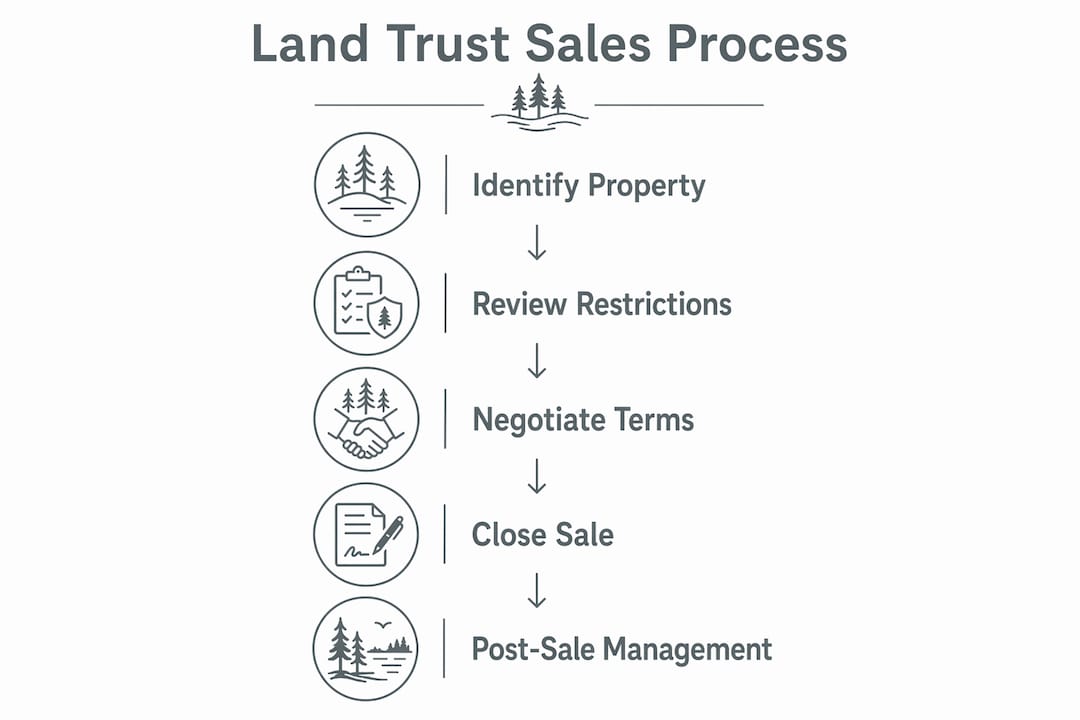
The land trust sales process in Wisconsin starts with one key fact: the trust holds title, not the individual seller. A trustee or board manages the property and controls how it is listed, priced, and transferred. This structure exists because land trusts prioritize conservation or community goals over profit. That changes the entire dynamic of the transaction for buyers.
Here is how a typical sale unfolds:
- Property assessment. The trust evaluates whether the parcel fits its mission. Land trusts often sell unsuitable parcels to raise funds for higher-value conservation projects elsewhere. So the property you are buying may be one the trust no longer needs for its core goals.
- Listing and disclosure. The trust lists the property, often through a real estate agent or directly. Any conservation easements tied to the land must be disclosed upfront. Buyers receive documentation outlining all restrictions that run with the deed.
- Offer and negotiation. Buyers submit offers. In some cases, the trust may accept a below-market offer as a bargain sale, which carries tax benefits for the seller. Negotiation here is different from a standard deal because the trust’s mission shapes what it will accept.
- Title review and due diligence. This step is critical. You need to review the easement terms, any retained rights the trust holds, and all deed restrictions before moving forward.
- Closing. Standard land closings in Wisconsin take 30–45 days with financing and 14–30 days for cash transactions. Budget 2–4% of the purchase price for closing costs, including title insurance, loan origination fees, and recording fees.
Pro Tip: Ask the trust directly whether the property carries any retained rights, such as a residential envelope or life estate, before you make an offer. These details rarely appear in standard listings.
What legal considerations affect land trust property sales?
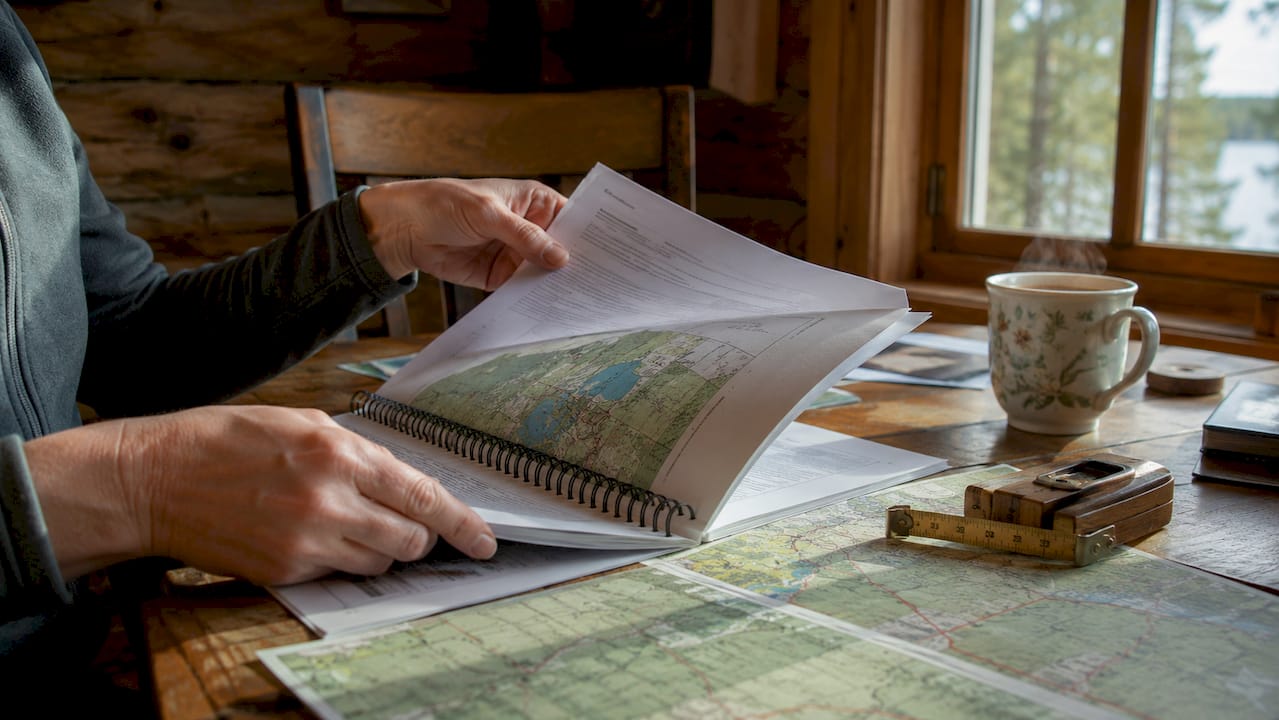
The legal framework around Wisconsin land trust property transactions is more layered than a standard real estate purchase. Buyers who skip due diligence here often discover restrictions after closing that limit how they can use the land.
Key legal factors to understand:
- Conservation easements. Land trusts use conservation easements to impose permanent restrictions that run with the deed. These easements remain in place regardless of who owns the property. A new buyer inherits every restriction the easement contains.
- Development limits. Easements typically prohibit subdivision, commercial development, and sometimes even new structures. You need to read the easement document in full before signing anything.
- Bargain sales. A bargain sale is a tax-advantaged transaction where the seller accepts below fair market value, and the difference counts as a charitable donation eligible for tax deductions. The appraisal for tax purposes must be dated within 60 days of the sale closing. This structure benefits the trust and can sometimes create room for buyer negotiation.
- Retained rights. Some land trusts retain partial ownership rights like residential envelopes or life estates when transferring property. Buyers must confirm exactly what rights they are acquiring.
- Wisconsin-specific statutes. Wisconsin law governs how trusts hold and transfer title. A real estate attorney familiar with Wisconsin land trust guidelines is not optional here. It is a necessity.
“Buyers should always verify that a land trust property’s conservation easement does not unduly restrict intended property uses before purchase negotiations begin.” — Legal Clarity
Engaging a Wisconsin real estate attorney who specializes in conservation transactions protects you from surprises. Title companies experienced with easement properties are equally important. Do not rely on a general practice attorney for this type of deal.
How do Community Land Trusts sell homes in Wisconsin?
Community Land Trusts, or CLTs, operate differently from conservation land trusts. A CLT holds the land permanently and sells only the home or structure on it to the buyer. This separation of land and home ownership is the defining feature of the CLT model.
Big River Community Land Trust is one example operating in Wisconsin. CLTs like this one use specific buyer qualifications to keep homes affordable over time.
Buyer eligibility for CLT properties:
- Household income must fall between 60% and 120% of the local median family income. This range targets working families who earn too much for traditional subsidized housing but too little to compete in the open market.
- Buyers must qualify for a mortgage before applications are processed. Applications are then handled on a first-come, first-served basis.
- Eligibility can also depend on residency status and community ties for certain CLT programs. Each trust sets its own criteria, so you need to check directly with the organization.
The resale restriction model:
CLT buyers agree upfront to resale restrictions that limit appreciation when they sell. The goal is to keep the home affordable for the next qualifying buyer. This “pay it forward” structure means you will not capture full market appreciation when you sell. That trade-off is intentional. CLTs prioritize long-term community stability over individual wealth building.
Pro Tip: If you are buying a CLT home as an investment, reconsider. The resale formula limits your upside by design. CLT ownership works best for buyers who want stable, affordable housing and plan to stay in the community long term.
Community Land Trusts emphasize community stability above profit, which shapes every aspect of the sales terms and buyer expectations. Going in with that understanding makes the process much smoother.
What types of land trust properties are available in Wisconsin?
Wisconsin land trust properties fall into two broad categories, and the type you buy determines what you can do with the land.
| Property Type | Ownership Structure | Development Rights | Common Uses |
|---|---|---|---|
| Fee-simple with no easement | Full ownership transferred to buyer | Unrestricted (subject to zoning) | Residential, agricultural, recreational |
| Fee-simple with conservation easement | Full ownership, but easement restricts use | Limited, no subdivision or major development | Farming, hunting, passive recreation |
| CLT home on trust land | Buyer owns structure, trust owns land | Governed by ground lease terms | Primary residence only |
| Partial rights (life estate) | Shared rights between trust and buyer | Defined by agreement | Residential use during life estate period |
Conservation land trusts like the Northeast Wisconsin Land Trust protect land through both fee-simple ownership and easements. When a trust acquires land outright, it may later sell that parcel if it no longer serves the conservation mission. Buyers of these parcels sometimes get land with no easement attached, which means broader use rights. Other times, the trust places an easement on the property before transferring it to private ownership, and buyers may lack full development rights as a result.
Properties with easements often allow farming, hunting, hiking, and limited residential use. They prohibit subdivision and large-scale development. If you want to build a cabin on a conserved parcel, check the easement terms carefully. Some easements carve out a residential envelope where a single structure is permitted. Others do not allow any new construction at all.
The Northern Wisconsin communities surrounding these land trust properties often have strong recreational access, including trails, lakes, and public forests. That context adds real value to conserved parcels even when development rights are limited.
Key takeaways
Buying a land trust property in Wisconsin requires understanding the trust’s mission, the legal restrictions attached to the land, and the specific buyer qualifications that apply to each property type.
| Point | Details |
|---|---|
| Trust holds title | The land trust manages the sale under conservation or community guidelines, not standard market terms. |
| Easements are permanent | Conservation easements run with the deed and restrict use regardless of ownership changes. |
| CLT buyers face income limits | Household income must fall between 60% and 120% of local median family income to qualify. |
| Bargain sales offer tax benefits | Sellers who accept below market value may claim the difference as a charitable deduction. |
| Legal counsel is required | A Wisconsin real estate attorney familiar with land trust transactions protects buyers from post-closing surprises. |
My take on buying land trust properties in Wisconsin
I have watched a lot of buyers approach land trust properties the same way they would approach any other real estate deal, and that is where things go sideways. The biggest misconception I see is that buyers assume all land trusts operate the same way. Each trust has unique stewardship policies and sale conditions. What applies to a CLT in Madison does not automatically apply to the Northeast Wisconsin Land Trust or a conservation trust in Vilas County.
The second thing I would tell any buyer is to read the easement before you fall in love with the land. I have seen people get emotionally attached to a parcel, make an offer, and then discover the easement prohibits the very thing they wanted to do there. That is a painful and avoidable situation.
Bargain sales are genuinely underused by buyers as a negotiation tool. If you are purchasing from a conservation trust, a below-market offer structured as a bargain sale can work in your favor. The trust gets a charitable deduction, and you get a lower purchase price. Both sides win when the deal is structured correctly.
Finally, do not underestimate the value of the land itself even with restrictions. A conserved parcel in the Northwoods with access to trails and lakes holds long-term value that goes beyond what any development could create. The restrictions that feel limiting on paper often protect the very qualities that make the land worth owning.
— Chris
Plan your visit to Northwoods Wisconsin land trust country
If you are seriously considering buying land trust property in northern Wisconsin, spending time in the region first is one of the smartest moves you can make. You get a feel for the communities, the land, and the lifestyle before you commit to anything.
Northwoodswisconsin makes it easy to find lodging while you explore. Whether you want a lakeside cabin at Anchor Rentals in St. Germain or a resort stay at Idle Hours Resort, you can base yourself right in the heart of land trust country. Use the time to visit properties, meet with local real estate professionals, and explore the Northern Wisconsin real estate resources the region offers. The Northwoods is a place worth knowing before you buy into it.
FAQ
What is a land trust property sale in Wisconsin?
A land trust property sale in Wisconsin is a transaction where the trust holds legal title and manages the sale under conservation or community guidelines. The buyer acquires the property subject to any easements or restrictions the trust has placed on it.
How long does a Wisconsin land trust sale take to close?
Standard land closings in Wisconsin take 30–45 days with financing and 14–30 days for cash transactions. Land trust sales may take longer if easement review or trustee approval is required.
Can anyone buy a Community Land Trust home in Wisconsin?
No. CLT buyers must have household incomes between 60% and 120% of the local median family income and must qualify for a mortgage. Applications are processed first-come, first-served after mortgage qualification.
Do conservation easements expire when a property is sold?
Conservation easements are permanent and run with the deed regardless of ownership changes. A new buyer inherits all restrictions the easement contains, which is why title review before purchase is critical.
What is a bargain sale in a land trust transaction?
A bargain sale is when a seller accepts below fair market value for a property, with the difference treated as a charitable donation eligible for tax deductions. The appraisal must be completed within 60 days of closing to validate the charitable contribution.
Recommended
