
TL;DR:
- Most lake property purchases fail due to buyers neglecting lake governance, rights, inspections, and costs, which can be avoided with proper research. A specialized waterfront agent, off-season visits, and thorough permit checks are essential steps to prevent costly mistakes that often go unnoticed by generalists. Confirming legal access, water quality, and ongoing expenses ensures a realistic and successful lakefront investment.
Most lake property purchases go sideways for the same predictable reasons: buyers skip lake governance research, misread waterfront rights, skip specialized inspections, or underestimate total ownership costs. The good news? Every one of these errors is avoidable with the right checklist.
Here are the top mistakes and a one-line fix for each:
- Wrong agent type — hire a waterfront specialist, not a generalist
- Skipping off-season visits — schedule one before waiving contingencies
- Ignoring lake governance — confirm who controls the lake (association, power authority, or municipality) before making an offer
- Assuming shoreline ownership — verify where your deed ends via a title search and high-water mark survey
- No FEMA flood check — pull the FEMA flood map and request an elevation certificate
- Skipping water quality research — check EPA water-quality monitoring and state DNR records for algae or bacteria advisories
- Overlooking septic and well systems — order licensed inspections before closing
- Missing dock permit history — request all permits from the association and local authority
- Underestimating ongoing costs — build a written annual maintenance estimate before negotiating price
- No title search for riparian rights — confirm legal lake access in the deed, not just the listing
- Skipping resale research — ask your agent for closed comps on the same lake, not just the region
The bottom line: Lake purchases fail most often because buyers treat them like standard residential deals. They are not.
Table of Contents
- Why lake properties behave differently from standard real estate
- What are the most common lake property buying mistakes?
- How do you evaluate a lake property before making an offer?
- What inspections should you order for a lake property?
- What does lake property ownership actually cost?
- How do lake governance and riparian rights affect what you can do?
- What should you do right after closing on a lake property?
- Key Takeaways
- The detail most buyers overlook until it is too late
- Northwoodswisconsin helps lake property buyers research smarter
- FAQ
- Authoritative sources to verify before you close
Why lake properties behave differently from standard real estate
Lake property rights, governance, seasonality, and hydrology create legal and maintenance obligations that simply do not exist in typical residential transactions. The shoreline you see from the deck may not be yours to modify. The dock you plan to build may require permits from three separate agencies. And the quiet cove you toured in July may be inaccessible by road in February.
State Departments of Natural Resources (DNRs) regulate shoreland zoning, setback requirements, and vegetation buffers, often within 75–300 feet of the ordinary high-water mark. Lake associations, power authorities, and municipalities layer their own rules on top of those. What you can build, when you can run a motorboat, and whether you can rent the property short-term all depend on which governing body controls the water.
Pro Tip: Industry experts consistently note that generalist agents routinely miss septic red flags, lake association bylaws, and water-related zoning issues. Hire a waterfront specialist — someone who knows the specific lake, its governing body, and local permit processes — before you start touring.
What are the most common lake property buying mistakes?
Here are 12 errors that trip up buyers, along with red flags and exact next steps.
1. Using a generalist real estate agent
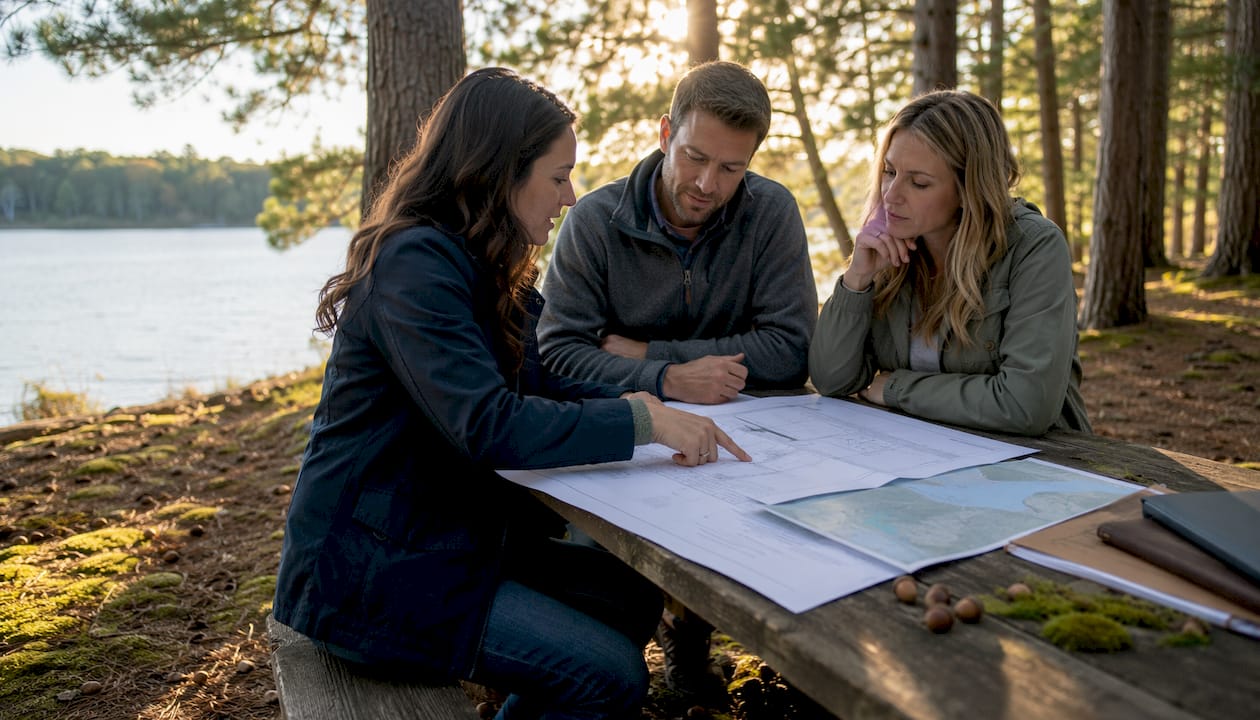
Lake-specific legalities — dock permits, Corps of Engineers boundaries, water rights — require specialized knowledge. Red flags: your agent cannot name the lake’s governing body or explain riparian rights. Ask for references from recent lakefront closings on that specific lake.
2. Skipping the off-season visit
A summer tour hides icy driveways, flooded access roads, and emergency-response gaps. Experts advise scheduling at least one off-season visit before waiving contingencies. Photograph road conditions, dock removal status, and any visible shoreline erosion.
3. Not researching lake governance
Lakefront Living International reports that governance is the most commonly overlooked source of buyer regret. Private associations, power authorities, and municipalities each set different rules on docks, fees, horsepower limits, and quiet hours. Request the bylaws and last two years of meeting minutes before making an offer.
4. Misunderstanding shoreline ownership
Ownership frequently ends at the high-water mark, and any dock, seawall, or shoreline modification typically requires permits from the association, a power authority, or a state agency. Request the full permit history for all shoreline structures.
5. Skipping the FEMA flood zone check
Missing elevation certificates can force owners to remove enclosed lower-level spaces or lose insurable square footage. Pull the FEMA flood map, confirm the flood zone designation, and order an elevation certificate from a licensed surveyor before closing.
6. Ignoring water quality
Algae blooms and bacteria spikes often follow heavy rain events and can close a lake to swimming for weeks. Check the state DNR’s lake monitoring page and EPA records for harmful algal bloom (HAB) history. Ask how often the lake is tested and who manages the results. See how water quality affects property value before you commit.
7. Overlooking septic and well systems
Noncompliant septic systems can result in mandatory replacement costing tens of thousands of dollars. Order a licensed septic inspection and a certified water quality test for the well. Ask for all maintenance records and continued-use permits.
8. Missing dock and shoreline permit rules
Shoreland zoning and local ordinances restrict what you can build within a set distance of the water, often 25–100 feet. Review the lake classification and zoning rules and confirm that all existing structures have current permits.
9. Assuming road and utility access
Remote lake properties sometimes lack year-round road maintenance, municipal water, or reliable emergency response. Ask the county road department who maintains the access road and whether it is plowed in winter.
10. Not confirming legal lake access
Listings advertised as “lake access” or “right of way to lake” are not always accurate. Confirm legal access in the deed itself, not just the MLS description. Some lakes lack public launches and are effectively private, which affects traffic, use, and resale. Check the lake access property checklist for a full verification framework.
11. Underestimating seasonal maintenance
Dock installation and removal, winterization, shoreline stabilization, and driveway upkeep add up fast. Get a written, itemized annual maintenance estimate before you negotiate price.
12. Ignoring resale and micro-market value
Shoreline configuration, water depth, and usage rules create strong value variation even within the same lake. Ask your agent for closed comps on the same body of water, and review why lakefront values differ before finalizing your offer price.
How do you evaluate a lake property before making an offer?
Start with the checks that eliminate the biggest risks first, then work toward closing.
Before submitting an offer:
- Pull the FEMA flood map and confirm the flood zone designation
- Request the lake association bylaws, recent meeting minutes, and annual budget
- Confirm legal lake access and riparian rights in the deed
- Ask the listing agent for all existing dock and shoreline permits
- Check the state DNR lake page for water quality and HAB history
During the contract period:
- Order a licensed septic inspection and well water quality test
- Hire a licensed surveyor to locate the high-water mark and property boundaries
- Order an elevation certificate if the property is in or near a flood zone
- Schedule a structural home inspection with a waterfront-experienced inspector
- Request all maintenance records and utility account details from the seller
Before closing:
- Make your off-season visit and document road conditions, access, and shoreline state
- Confirm all planned improvements are permittable under current zoning
- Review the title report for easements, covenants, and access rights
Pro Tip: Off-season visits expose winter access realities that peak-season tours hide. Bring a camera, note the date, and ask a neighbor about road conditions during the worst winter months. Those photos and notes become leverage if you need to negotiate repairs or credits.
What inspections should you order for a lake property?
| Inspection Type | What It Checks | Who Performs It | Typical U.S. Cost |
|---|---|---|---|
| Structural home inspection | Foundation, roof, moisture, pest | Licensed home inspector | a few hundred |
| Septic inspection | Tank condition, drain field, permits | Licensed septic inspector | a few hundred |
| Well / water quality test | Bacteria, nitrates, pH, contaminants | Certified water testing lab | — |
| Elevation certificate | Flood zone, base flood elevation | Licensed land surveyor | — |
| Shoreline / boundary survey | High-water mark, property lines | Licensed land surveyor | — |
| Dock and shoreline permit review | Permit history, compliance status | Real estate attorney or agent | Varies |
Sample contingency language to request:
- “This offer is contingent upon a satisfactory septic inspection completed by a licensed inspector within 14 days of acceptance.”
- “Buyer’s obligation to close is contingent upon receipt of a current elevation certificate confirming the property is not located in a Special Flood Hazard Area, or buyer’s written acceptance of flood zone status.”
- “Seller to provide all existing dock and shoreline permits within 10 days of acceptance.”
What does lake property ownership actually cost?
Expect a higher down payment risk for second homes, likely flood insurance, and material recurring costs that most buyers do not budget for upfront.
Recurring annual cost categories to plan for:
- Flood insurance: Required in FEMA Special Flood Hazard Areas; premiums vary widely by zone and elevation
- Lake or homeowners association dues: Can range from a few hundred to several thousand dollars annually
- Dock installation and removal: Seasonal labor and storage fees, typically a few hundred to over a thousand dollars per season depending on dock size
- Septic pumping and inspection: Recommended every 3–5 years; budget accordingly
- Shoreline stabilization: Erosion repair and riprap maintenance, cost varies by shoreline length and condition
- Seasonal winterization: Plumbing, dock, and exterior prep each fall
- Property taxes: Often higher for waterfront parcels; confirm the current assessed value and tax rate with the county
Pro Tip: Before negotiating, ask the seller for the last two years of association budgets, maintenance invoices, and insurance declarations. Present your itemized annual estimate to the seller as part of your offer rationale. It signals you are a serious, informed buyer and often opens the door to price adjustments or seller credits.
Financing differences matter too. Second-home mortgages typically require a larger down payment and may carry a slightly higher rate than primary residence loans. Remote or seasonal properties can also trigger additional lender requirements around year-round access and utility availability. Jumbo loan thresholds apply in many lakefront markets.
How do lake governance and riparian rights affect what you can do?
Who controls the lake usually controls docks, motor rules, fees, and shoreline changes. Confirm the governing structure before you fall in love with the property.
The most common governing bodies are private lake associations, power authorities (common on reservoir lakes), municipalities, and state DNR agencies. Each can impose different restrictions, and their authority often overlaps.
Documents to request:
- Lake association bylaws and most recent meeting minutes
- Annual association budget and fee schedule
- State DNR lake management plan or classification order
- Municipal shoreland zoning ordinance
- All existing dock, seawall, and shoreline improvement permits
Questions to ask the association or local DNR:
- What is the horsepower limit, and are personal watercraft allowed?
- Are docks permitted, and what size and type?
- Is seasonal dock removal required, and by what date?
- Are short-term rentals allowed under association rules?
- How are violations enforced, and are there any pending disputes?
- What fees are required, and how often do they change?
- Are there any planned rule changes or assessments in the next two years?
A lake’s personality — its horsepower limits, quiet hours, and enforcement culture — often drives long-term owner satisfaction more than the house itself.
What should you do right after closing on a lake property?
Your first 90 days set the tone for everything that follows.
- Confirm road and utility access — transfer all utility accounts and verify winter road maintenance responsibility with the county or township.
- Join the lake association — introduce yourself, attend the next meeting, and request a current copy of the bylaws and fee schedule.
- Schedule a septic pump and inspection if the seller cannot document one within the past three years.
- Obtain all required permits for any improvements you plan, including dock modifications, before starting any work.
- Winterize thoroughly — drain pipes, remove or secure the dock per association rules, and inspect the shoreline for erosion before freeze-up.
- Set up a maintenance calendar with seasonal reminders for dock removal, septic service, shoreline inspection, and winterization.
Seasonal maintenance checklist:
- Spring: Reinstall dock, inspect shoreline for winter erosion, service boat lift, check for pest entry points
- Summer: Monitor water quality advisories, inspect dock hardware, trim shoreline vegetation per DNR guidelines
- Fall: Remove dock by association deadline, winterize plumbing and irrigation, inspect roof and gutters
- Winter: Monitor access road conditions, check for ice damage to shoreline structures, review insurance coverage
For seasonal property management support, connecting with a local vendor familiar with lake-specific requirements saves time and prevents costly oversights.
Key Takeaways
Avoiding common lake property buying mistakes comes down to verifying governance, rights, inspections, and total costs before you close, not after.
| Point | Details |
|---|---|
| Verify governance first | Confirm who controls the lake and request bylaws, meeting minutes, and fee schedules before making an offer. |
| Check FEMA and elevation | Pull the FEMA flood map and order an elevation certificate early; missing permits can force removal of enclosed spaces. |
| Order septic and well inspections | Noncompliant septic systems can cost tens of thousands to replace; order licensed inspections during the contract period. |
| Visit off-season | Schedule one off-season visit before waiving contingencies to assess road access, winter conditions, and shoreline state. |
| Use Northwoodswisconsin resources | Northwoodswisconsin’s local guides, lake access checklists, and lodging listings help buyers research and visit Northern Wisconsin lake properties effectively. |
The detail most buyers overlook until it is too late
The conventional wisdom on lake buying focuses on the house: square footage, kitchen updates, the view from the deck. But the house is the least risky part of the transaction. You can renovate a kitchen. You cannot change the lake’s horsepower limit, the association’s enforcement culture, or the flood zone designation.
The buyers who regret their lake purchases almost always say the same thing: they did not ask enough questions about the water before they fell in love with the property. They assumed the dock was permitted. They assumed the road was plowed. They assumed the association was reasonable. Assumptions are expensive on lakefront deals.
The checklist in this article is not meant to scare you off lake ownership. It is meant to get you to the right lake, with the right expectations, at the right price. Northern Wisconsin, with its over 3,200 lakes, offers genuinely exceptional options for buyers who do their homework. The difference between a great purchase and a costly mistake is usually a few targeted questions asked before the offer goes in.
Northwoodswisconsin helps lake property buyers research smarter
Planning a trip to tour Northern Wisconsin lake properties? Northwoodswisconsin is the local guide built for exactly this kind of research. The site centralizes lodging, lake access information, recreation listings, and buyer-focused guides across more than 3,200 Northern Wisconsin lakes, so you can plan an off-season inspection trip and evaluate the surrounding area in one place.
Book a stay at Idle Hours Resort in St. Germain or browse Anchor Rentals cabin options to put yourself on the water during your due diligence visit. From there, use the site’s lake access checklists, dock permit guides, and water quality resources to work through the buyer checklist before your offer goes in. Start your research at Northwoodswisconsin.com.
FAQ
What is the biggest mistake first-time lake house buyers make?
Skipping lake governance research is the most common and costly error. Buyers who do not confirm who controls the lake, what the rules are, and what fees apply often discover post-closing that their planned improvements are not permitted.
Do you need a specialized agent to buy a lake property?
Yes. Generalist agents routinely miss septic red flags, association bylaws, and water-related zoning issues that a waterfront specialist catches as a matter of routine.
How do you check flood risk on a lake property?
Pull the property’s flood zone designation on the FEMA flood map service, then order an elevation certificate from a licensed land surveyor to confirm compliance and insurance requirements.
What inspections are specific to lake properties?
Beyond a standard home inspection, order a septic inspection, a certified well water quality test, an elevation certificate, and a shoreline boundary survey to locate the high-water mark and confirm all dock structures are permitted.
How does water quality affect lake property value?
Poor water quality, including harmful algal blooms and E. coli advisories, can restrict swimming and boating for extended periods and suppress resale demand. Check state DNR monitoring records and EPA HAB data before closing.
Authoritative sources to verify before you close
The fastest verification steps are pulling the FEMA flood map, ordering a title search for riparian rights, and requesting the association bylaws directly.
Public data sources and documents to check:
- FEMA Flood Map Service Center (msc.fema.gov): Flood zone designation and Special Flood Hazard Area status
- EPA harmful algal bloom resources: National HAB monitoring data and state-level water quality reports
- State DNR lake pages: Water quality monitoring history, lake classification, shoreland zoning rules, and permit requirements
- County assessor and recorder: Elevation certificates on file, deed history, and easement records
- Title report: Riparian rights, access easements, covenants, and any recorded restrictions
- Lake association: Bylaws, meeting minutes from the past two years, current fee schedule, and pending assessments
Save copies of all association documents, the most recent budget, and any permit records as part of your permanent closing file. These documents are your first reference point for any dispute or improvement project after closing.
Recommended
