
TL;DR:
- Observing black bears safely in Wisconsin requires maintaining at least 50 yards distance and removing all attractants before and during visits. Limiting encounters through proper food storage, noise-making, and reporting conflicts helps keep both humans and bears safe; most negative interactions stem from food-conditioned bears. Following core safety steps ensures responsible wildlife viewing, especially during peak seasons like spring and fall when bear activity is highest.
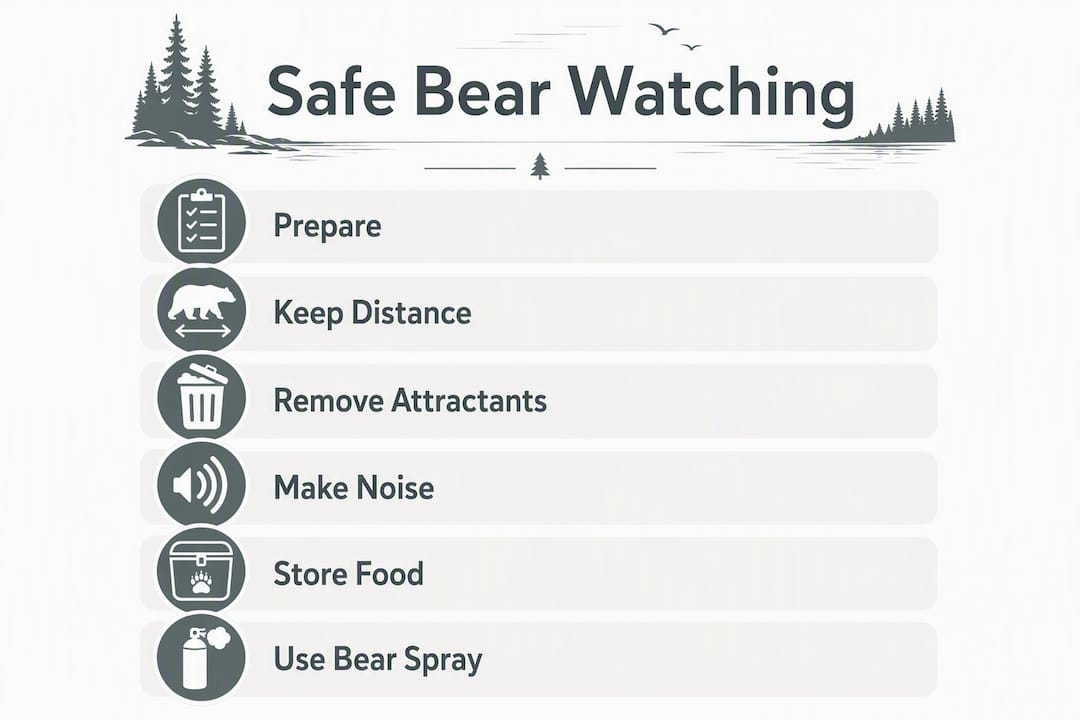
You can safely observe black bears on Wisconsin public lands by staying at least 50 yards away, removing all food attractants before and during your trip, traveling in groups on established trails, and knowing a short set of in-field actions if a bear approaches. The Wisconsin Department of Natural Resources (WI DNR) and BearWise® both center their guidance on one core idea: prevention beats deterrence every time.
Quick TL;DR:
- Stay back, use binoculars, and never approach a bear or its cubs
- Remove bird feeders, secure garbage, and store all scented items before heading out
- If a bear approaches, stay calm, make noise, and back away slowly — never run
- Report conflicts to WI DNR staff or campground hosts
There are no documented human fatalities caused by wild black bears in Wisconsin. Most negative encounters trace back to food-conditioned bears that have learned to associate people with easy meals. Keep that in mind: the risk is real but manageable, and the steps below put it firmly in your control.
Table of Contents
- When and where you’re most likely to see black bears in Wisconsin
- Before you go: how to remove attractants and prevent bear encounters
- How to watch bears safely while hiking or at a campsite
- Keeping your pets safe around bears in Wisconsin
- Step-by-step actions during a bear encounter
- How to report bear sightings and where to get official guidance
- Your printable safety checklist for bear watching on Wisconsin public lands
- Key Takeaways
- A local perspective on watching bears responsibly in the Northwoods
- Plan a safe bear-watching trip with the right Northwoods base
- Official resources and further reading
- FAQ
When and where you’re most likely to see black bears in Wisconsin
Black bears in Wisconsin follow a predictable seasonal rhythm, and knowing it helps you plan smarter. Spring is the peak window for sightings near roadsides and forest edges, as bears emerge from winter torpor hungry and searching for early green-up vegetation. Early summer brings a second wave of activity when yearling males disperse from their mothers’ territories, sometimes showing up in unexpected locations.
Late summer and fall trigger hyperphagia, an intense feeding period when bears consume thousands of calories daily to build fat reserves. During this phase, berry patches, oak ridges loaded with acorns, and agricultural edges near public forests draw concentrated bear activity. Your best chances for bear watching in Wisconsin’s public lands come during these two windows.
Geographically, black bears prefer northern hardwood and conifer forests, and the highest densities remain in the northern third of the state. Wisconsin has a substantial black bear population; however, they have expanded their range southward over recent decades, so no county should be considered completely free of sightings.
Signs of bear presence to watch for:
- Tracks: five-toed prints with claw marks, front paw roughly 4 inches wide
- Scat: dark, berry-filled droppings often left on trails or near food sources
- Bark rubs and claw marks: on smooth-barked trees like aspen, often at shoulder height
- Overturned logs and torn-apart stumps where bears have been digging for insects
Before you go: how to remove attractants and prevent bear encounters
Removing attractants is the single most effective step you can take. The WI DNR’s “Be Bear Aware” campaign puts prevention first for good reason: a bear that never finds human food never becomes a problem animal.
Attractant control checklist before any trip:
- Remove bird feeders completely during bear-active months (April through November) and clean up spilled seed beneath the feeder location
- Store garbage in a hard-sided, latched container or inside a building until collection day
- Clean grills after every use and store them in a garage or shed
- Keep pet food indoors; never leave it on a porch or deck overnight
- Pack out all food waste from picnic areas on public lands
Pro Tip: Scent control goes beyond food. Toothpaste, sunscreen, lip balm, and even scented soap count as attractants. Pack them in sealed bags and store them with your food, not in your tent.
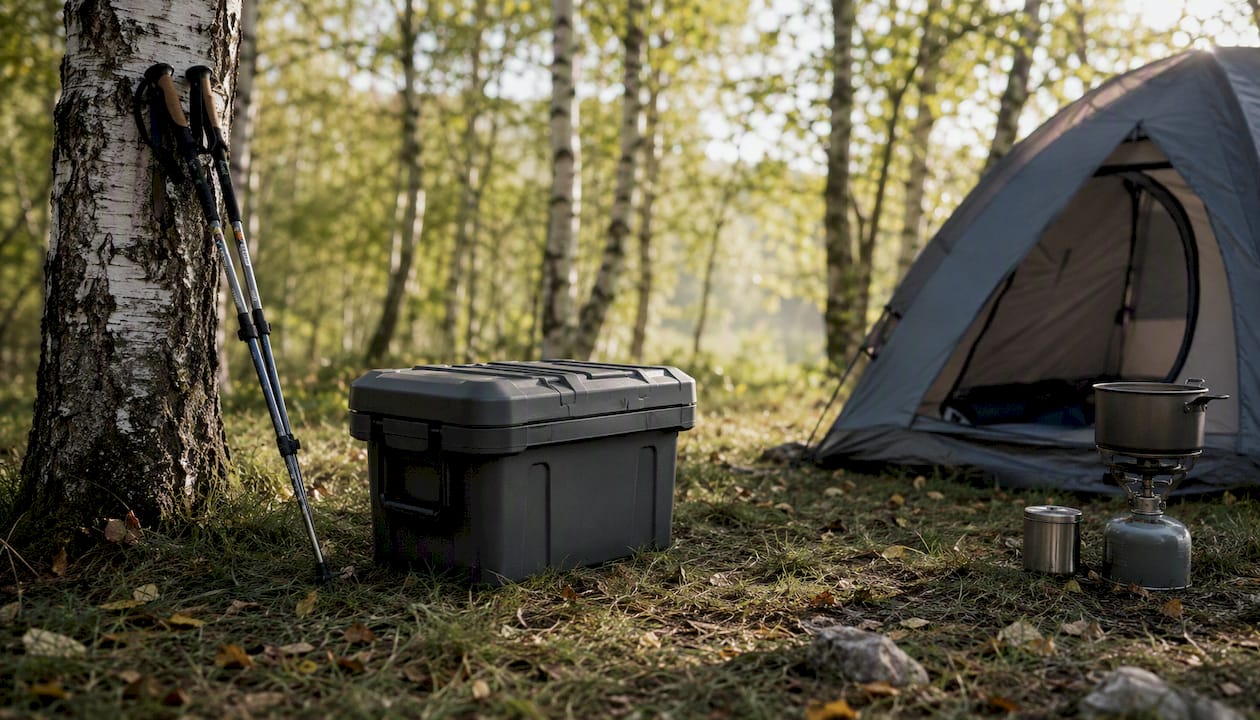
For overnight trips, vehicles and standard coolers are not bear-resistant. A determined bear can break into a cooler or pry open a car door. Use bear lockers where provided at DNR properties, or hang your food using the specifications below.
| Storage Method | Specification | Notes |
|---|---|---|
| Food hang height | 12 feet off the ground | Measured from the lowest point of the bag |
| Hang distance from support | 6 feet from any vertical support | Prevents bears from climbing to reach the bag |
| IGBC-certified container | Manufacturer-rated | Best option for multi-night backcountry trips |
| Bear lockers (DNR sites) | Use when provided | Check availability before your trip |
If you’re planning a backcountry overnight, review Wisconsin’s backcountry camping permits for site-specific food-storage rules before you leave home.
How to watch bears safely while hiking or at a campsite
The goal is observation without interaction. Bears that associate humans with neutral experiences stay wild; bears that get rewarded with food or startled into defensive behavior become problems.

Keep at least 50 yards of distance between yourself and any bear you spot. Binoculars or a telephoto lens let you watch behavior in detail without closing that gap. Never try to get closer for a better photo.
On trails, make noise as you walk. Talk, clap occasionally, or use a bear bell on dense-cover sections. Hiking in groups of three or more significantly reduces the chance of a surprise encounter because the noise and scent profile of a group is harder to miss. Stick to established trails on DNR properties and follow any posted rules at trailheads.
At the campsite, cook and eat at least 200 feet from your sleeping area. Store all scented items, including the clothes you cooked in, away from your tent. Lock vehicles and keep coolers out of sight inside them. A clean camp is a safe camp, and it protects the bears as much as it protects you.
Keeping your pets safe around bears in Wisconsin
Dogs and bears are a risky combination. A dog that charges a bear, especially a sow with cubs, can trigger a defensive response that puts both the dog and you in danger. Keep dogs on a leash and under control at all times in bear country — this is also a legal requirement on most Wisconsin public lands.
Key rules for pet owners:
- Leash your dog on all DNR-managed trails and campgrounds
- Do not let your dog approach or chase a bear under any circumstances
- Never attempt to physically intervene in a dog-bear confrontation
- If a confrontation begins, prioritize your own safety, retreat to a safe location, and call for help
No dog breed is a reliable deterrent against a black bear. Attempting to pull your dog away from an aggressive bear puts you directly in harm’s way. If your dog provokes an encounter and you cannot safely recall it, move away from the area and report the incident to DNR staff or campground hosts immediately.
Step-by-step actions during a bear encounter
Stay calm and do not run. That is the most important thing you can do. Running triggers a chase response, and a black bear can cover ground far faster than any person.
- Back away slowly while facing the bear. Never turn your back, and never corner the bear — always give it a clear escape route.
- Deploy bear spray if the bear charges. Bear spray is recommended when a bear exhibits aggressive or charging behavior. Aim for the face at close range and know how to use it before you need it.
- Call 911 for an immediate threat — For non-emergency sightings or conflicts, report to WI DNR staff, your campground host, or the DNR’s Wildlife Observation tool.
Pro Tip: Practice deploying your bear spray before your trip. Remove it from the holster, disengage the safety, and rehearse the motion. In a real encounter, muscle memory matters.
How to report bear sightings and where to get official guidance
Reporting sightings helps WI DNR track population movements and respond to conflict areas before they escalate. Here’s how to do it:
- Non-emergency sightings: — Use the WI DNR Wildlife Observation tool or speak with your campground host or park ranger
When you file a report, collect as much detail as possible: exact location (GPS coordinates if available), time of day, bear behavior, whether cubs were present, and any attractants nearby. That information helps wildlife managers assess whether a bear is food-conditioned and whether abatement is needed.
Your printable safety checklist for bear watching on Wisconsin public lands
Before you leave home:
- Remove bird feeders and clean up spilled seed
- Secure all garbage in latched containers
- Pack bear spray and know how to use it
- Bring binoculars or a telephoto lens
- Save WI DNR and USDA Wildlife Services contact numbers in your phone
Day-use trips:
- Pack out all food waste; leave no crumbs or wrappers at picnic sites
- Store food in your locked vehicle when not eating
- Keep pets leashed at all times
Overnight and backcountry trips:
- Hang food 12 feet high and 6 feet from any vertical support, or use an IGBC-certified container
- Cook and eat 200 feet from your sleeping area
- Store scented toiletries with your food, not in your tent
- Check for bear lockers at your specific DNR site before arrival
Key Takeaways
Safe bear watching on Wisconsin public lands comes down to three non-negotiable habits: keep your distance, remove every attractant before and during your trip, and know the calm, step-by-step response for an encounter.
| Point | Details |
|---|---|
| Distance is your best tool | Stay at least 50 yards from any bear; use binoculars or a telephoto lens to observe safely. |
| Attractant removal prevents most conflicts | Remove bird feeders, secure garbage, and store scented items before every trip — this is the WI DNR’s top prevention priority. |
| Food hang specs matter | Hang food 12 feet off the ground and 6 feet from any vertical support; vehicles and standard coolers are not bear-resistant. |
| Encounter response: stay calm, don’t run | Back away slowly while facing the bear, make noise, and deploy bear spray only if the bear charges. |
| Northwoodswisconsin local resources | Use Northwoodswisconsin to find lodging near public lands that follows DNR food-storage guidance and supports safe wildlife viewing. |
A local perspective on watching bears responsibly in the Northwoods
The most common mistake visitors make in the Northwoods isn’t ignoring bears. It’s underestimating how quickly a food-conditioned bear can become a fixture at a campsite or trailhead. A bear that finds a cooler left on a picnic table on Monday will be back on Tuesday. That pattern is how a healthy wild animal becomes a management problem, and sometimes a bear that has to be removed.
What you see at well-run Northwoods lodges and campgrounds is instructive. Properties that take attractant control seriously, latched dumpsters, no bird feeders during bear season, clear guest guidelines, have far fewer bear incidents than those that don’t. That’s not coincidence. It reflects exactly what the WI DNR and BearWise® have been saying for years: the behavior of the people on the property determines the behavior of the bears around it.
The Northwoods also rewards patient, prepared visitors. Bears are genuinely fascinating to watch from a respectful distance, especially during the fall feeding season when they’re moving through berry patches and oak ridges. Pair good optics with the seasonal habitat knowledge of where bears concentrate, and you’ll have memorable sightings without any of the risk that comes from getting too close.
Plan a safe bear-watching trip with the right Northwoods base
If you’re planning a trip to see black bears on Wisconsin public lands, where you stay matters as much as what you pack. Properties near prime northern forest habitat give you easy access to the areas where bears are most active, and the best ones follow DNR guidance on food storage and garbage management so you’re not inadvertently attracting bears to your doorstep.

Northwoodswisconsin connects you with Northern Wisconsin lodging options close to public lands, from lakeside resorts to cabin rentals that put you right in bear country with the comfort and security you need. Check out Idle Hours Resort in St. Germain or browse Anchor Rentals for cabin options near prime wildlife habitat. Browse listings, check availability, and plan a stay that keeps you close to the action and well within DNR guidelines.
Official resources and further reading
Bookmark these before your trip. They’re the authoritative sources for current rules, reporting tools, and prevention materials.
- Black Bears in Wisconsin | WI DNR — Species overview, population data, and conflict prevention guidance; start here for a full picture of Wisconsin bear behavior.
- Recreating in Areas with Bears | WI DNR — Field-ready advice on food storage, encounter response, and bear spray; download or screenshot for backcountry trips.
- Black Bear Management | WI DNR — Regional population management, hunting season data, and abatement strategies; useful for understanding how the state tracks and responds to bear activity.
- Be Bear Aware (Spring) | WI DNR Newsroom — Annual spring release with current-season alerts and attractant reminders; check each spring before your first trip.
- Bear Safety | Apostle Islands National Lakeshore, NPS — Site-specific rules for one of Wisconsin’s premier public land destinations, including locker locations and distance requirements.
- Be Bear Aware: Summer Guidance | WI DNR Newsroom — Covers bird feeder removal, reporting contacts, and USDA Wildlife Services phone lines for both northern and southern Wisconsin.
FAQ
What should you do first if you see a black bear in Wisconsin?
Stay calm and do not run. Back away slowly while facing the bear, make yourself look large, and speak in a firm voice to help the bear identify you as human. Give it a clear escape route.
What part of Wisconsin has the most black bears?
The highest bear densities are in the northern hardwood and conifer forests of northern Wisconsin. Bears have expanded their range southward, but the Northwoods region remains the core of the state’s black bear population.
What smells do bears dislike?
Bears are not reliably repelled by household smells. The more useful approach is removing all attractive scents: food, garbage, grills, bird feeders, and scented toiletries. Bear spray, which uses concentrated capsaicin, is the only scent-based deterrent with documented effectiveness as a close-range defense.
Is it safe to bring a dog on a hike in Wisconsin bear country?
Yes, with precautions. Keep your dog leashed and under control at all times. Dogs can provoke defensive behavior from bears, especially sows with cubs. Never attempt to physically intervene if your dog confronts a bear.
How do you report a bear conflict or sighting in Wisconsin?
Contact WI DNR staff, your campground host, or use the DNR’s Wildlife Observation tool for non-emergency sightings. For property conflicts, reach USDA Wildlife Services through their regional Wisconsin phone lines. Call 911 if there is an immediate threat to safety.
Recommended
